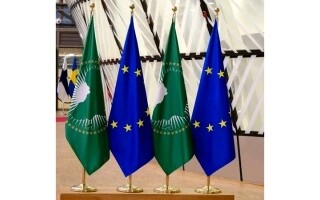
Two political analysts, Grégoire Roisse and Tigistu Amare, believe that when the leaders of the African Union and the European Union meet in the Angolan capital, Luanda, for their seventh summit today and tomorrow, they are meeting at a time of fading geopolitical certainty, with both blocs facing increasing internal pressures. According to Grégoire Roisse, Director of Europe, Russia, and Eurasia Programmes, and Tigistu Amare, Director of Africa Programme at the Royal Institute of International Affairs (Chatham House), in a report published by the institute, the African Union has come to occupy a more central place in Europe's economic and geopolitical calculations, not least due to the growing demand for Africa's vital minerals, increasing insecurity within EU countries, and concerns over migration. Roisse and Amare added that 'Europe remains a vital partner for Africa, as it is Africa's largest export market, a primary source of investment, development finance, and technology. The EU is also a key diplomatic ally in global forums where African governments seek reform on debt, climate finance, and global governance'. The sixth AU-EU summit, held in Brussels in February 2022, yielded a 'far-reaching common vision for 2030' and promised to reset political, economic, and security cooperation. Yet within days, Russia's war in Ukraine reshaped international markets, caused a shift in political attention, revealed divergent expectations for a multilateral alliance, and completely derailed the ambitious plans of the sixth summit. Nevertheless, the continued climate of global uncertainty now poses a stronger question than ever before about reviving a sense of ambition and resetting the AU-EU relationship. African countries have long faced challenges including weak manufacturing, infrastructure gaps, and high borrowing costs. The long-running conflicts in Sudan, the Democratic Republic of Congo, and parts of the Sahel have highlighted the fragility of state institutions, obstacles to regional coordination, and the African Union's limited influence. Meanwhile, a wave of youth-led 'Gen Z' protests points to growing frustration over political stagnation and economic exclusion. In conclusion, the analysts stated that if leaders seize this moment, Luanda could usher in a new, more realistic and forward-looking phase in relations. If they do not, the two continents risk drifting into a partnership defined by missed opportunities rather than moving towards forging a common strategy.